“Heirloom jewelry” has surged as a trending search term in the last two years, but the concept of passing down cherished possessions from one generation to the next is no new or fleeting phenomenon. While traditions vary across time and cultures, jewelry has for centuries been one of the most common ways to pass on a legacy. When you hold an heirloom in your hand, you’re holding more than gold, silver, or gemstones– you’re holding a story. The metal and stones of the jewel carry the memory of those who wore it before you.
For us, working with Mokume Gane – the centuries old art of fusing precious metals into flowing, wood-grain patterns – is about creating pieces that honor your story, and are worthy to be passed on for generations. The technique itself is steeped in heritage. Developed in the 17th century to adorn samurai swords, and now reimagined for rings, pendants, earrings, and keepsakes, Mokume Gane is meant to reflect the individuality and soul of the wearer. An heirloom is always valued as a direct insight and connection to the ones before us; there is no better glimpse of yourself to leave than a piece of jewelry uniquely designed for you.
While meaning matters tremendously, there is more that goes into creating heirloom jewelry: the piece must endure the physical tests of time and wear. This is particularly important for rings, which take the brunt of impact from the many things we do and carry day to day.
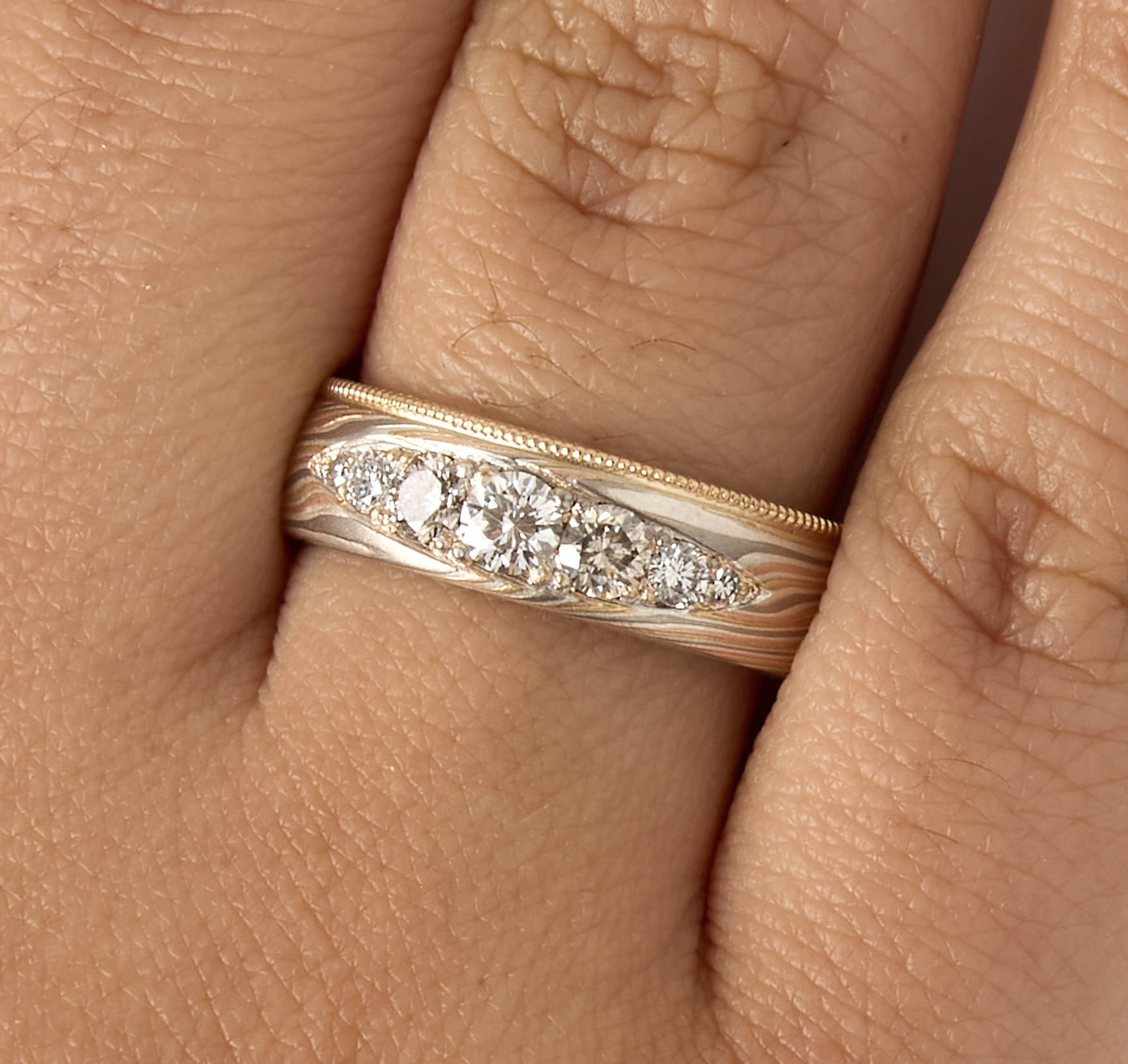
What Makes a Ring Heirloom Quality?
- The Metal – Heirlooms are built to last. Mokume Gane’s layered metals are not only beautiful, but incredibly durable. At Arn Krebs Mokume, we use unique combinations of platinum, palladium, silver and gold. These metals are strong individually, and in some cases even stronger in combination, ensuring they can be worn and loved for decades. Our rings are not lined and do not have any thin veneers of mokume. They are mokume through and through so that the mokume will not wear away over time, as it will in any lined ring.
- The Stone – Stones are stunning, and can truly elevate your piece. However, choosing the right stone is key.
- Diamonds are always an excellent choice. With a Mohs hardness of 10, diamonds are essentially scratch proof. With a variety of cuts and colors, diamonds can be as unique as they are enduring.
- Sapphires and Rubies are also well suited to heirloom rings. Having a Mohs hardness of 9, these colorful and valuable gems can sustain daily wear.
- Emeralds score only a 7.5 on the Mohs scale, making them less suited to daily wear on a ring. If you love emeralds, incorporating them into a pendant or earrings would be a better choice for longevity.
- Opals are also lovely, but simply too soft for an everyday ring meant to last generations.
- Other gemstones – there are a wide variety of stones, some of which work well in an heirloom ring; we are happy to discuss the possibilities and help to find the right one for you.
- The Setting – Along with stones, consider the setting. For heirloom jewelry, the more secure the setting, the better the piece will withstand impact and wear.
- Bezel settings fully wrap the stone, and are far more secure over decades than prongs. Strong, elegant, and classic, a bezel setting is always a lovely choice for heirloom jewelry.
- Prong settings use small metal projections to grip the stone in place. Prong settings allow more light to shine through the stone. If you decide to go with a prong setting, a 6-prong setting will be more secure than a 4-prong setting.
- Flush settings are very secure, the stone is set directly into the band and level with the rest of the ring. This is great for incorporating multiple small stones into a band.
- Cathedral settings are some of the most secure, as the rings is made thicker to match the stone, offering protection like the flush style, but able to accommodate larger stones for a statement look. This setting is well suited to an active lifestyle.
- The Size – When it comes to heirloom ring settings, “tiny is temporary.” Tiny stone settings such as pavé or micro-pavé, may give a shimmery look now, but these small stones fall out over time, and do not make for heirloom quality jewelry in a main setting. Thicker, chunkier settings survive daily wear far better than delicate ones.
- The Construction – Hand-fabricated, forged rings, will stand the test time. Most mass produced jewelry is cast, using standardized molds and automated systems, with hollow centers. This allows for efficiency and cost reduction, but the result is far less durable. Here at Arn Krebs Mokume, each ring is artisan made, hand crafted, and forged to last. Because we work on each ring individually, details are carefully addressed. Seamless, well-finished solder joints, and stone seats that keep precious gems secure without movement are always prioritized. As Arn says, “a well-made ring should only ever need a light polish and occasional prong check.” We expect a ring from Arn Krebs Mokume will need nothing more for generations to come.
Why Mokume Gane Makes Perfect Heirloom Jewelry
The organic patterns in Mokume Gane echo the growth rings of a tree — a natural symbol of time, endurance, and life’s unfolding journey. When you choose a Mokume Gane piece that is properly crafted, you’re not just buying jewelry; you’re investing in a future heirloom jewelry piece that will carry your story forward.
Passing Down More Than Metal
An heirloom is a bridge between generations. It’s a way to say, I was here, I loved, and I lived. When your children or grandchildren wear your Mokume Gane ring, they’ll feel the significance of your journey, they’ll see the joy of your individualism, and they’ll add their own layer to it.
If you’re ready to create an heirloom jewelry piece that will outlast trends and hold meaning for decades to come, we’d be honored to craft it with you.